
Amplifying healthcare voices
Access to healthcare is a deeply personal and often complex experience, shaped by culture, awareness, and trust. So how can we better understand the realities of communities that are often underrepresented in traditional feedback systems?
In 2025, the Research Engagement Network (REN) Development Programme* asked an important question: what can we do to capture and truly understand the lived experiences of communities when it comes to healthcare? Doing so is about more than simply collecting data; it requires a safe space where people feel comfortable sharing openly. This is where the collaboration between Make More and Lucy’s Pantry in Walsall came in.
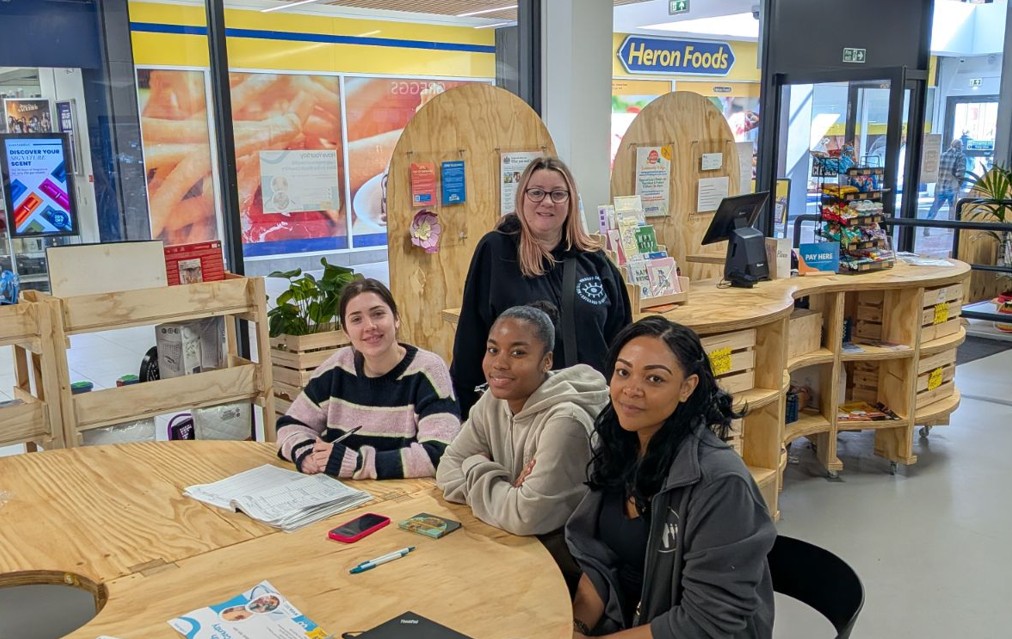
Lucy’s Pantry is a social supermarket and a trusted, welcoming space for local families. Beyond providing essential goods at discounted prices, it plays an important role as a space where people feel comfortable, seen, and heard. During the winter months, the Pantry also provides a Warm Hub, where people can escape the cold, enjoy a hot drink, and socialise. This makes it an ideal setting to engage individuals who may otherwise be overlooked in more conventional outreach efforts.
Make More, a community organisation focused on improving access to opportunities and support, works closely with underserved groups to address barriers and amplify lived experiences. Through initiatives spanning education, wellbeing, and advocacy, Make More is committed to ensuring that underrepresented communities are not only supported, but actively involved in shaping the systems that affect their lives.
Answering REN’s question meant leveraging the strengths of both organisations, combining their reach and insight to connect directly with individuals and create meaningful opportunities for underrepresented voices to be heard. Thus, the ‘Conversations About Healthcare & Wellbeing’ initiative came to life. In March, Make More employees and volunteers worked alongside Lucy’s Pantry to engage visitors to the Pantry and open the conversation about their experiences of accessing healthcare.
Through short, informal chats, visitors were invited to openly share their thoughts about the NHS and wider health services, helping to surface real, lived experiences from within the community. Common themes began to emerge, including long waiting times—not only for specialist care but also for GP appointments—difficulties accessing services for those who work or have caring responsibilities, and concerns about not always feeling heard or taken seriously.
The insights collected from the initiative will be brought together with findings from similar projects to build a richer, more comprehensive picture of community experiences. In doing so, REN will be able to draw out meaningful patterns and deepen understanding of the challenges people face, particularly the connections between healthcare access and wider factors such as food insecurity, work schedules, and low trust in the health services.
*Research Engagement Network Development Fund (NHS England) includes
partners: Black Country Integrated Care System (ICS), Wolverhampton Voluntary Community Action (WCVA), Black Country Together (BCT), Black Country VCSE Health and Wellbeing Alliance
